Hey guys! As a writer myself, it’s hard to have a lot of resources for writing in one place. That’s why I decided to create this masterpost, and maybe make more if I find future resources. I hope you like it, and expect to see more masterposts like this in the future!
ZenPen: A minimalist writing website to keep you free of distractions and in the flow.
The Most Dangerous Writing App: A website where you have to keep typing or all of your writing will be lost. It helps you keep writing…kind of. You can choose between a time or word count limit!
Evernote: An online website where you can take notes and save the product to your laptop and/or smartphone!
Writer, the Internet Typewriter: It’s just you and your writing, and you can save your product on the website if you create an account.
Wordcounter: A website to help check your word and character count, and shows words you’re using frequently.
Monospace: An Android app for writing on the go when you feel the inspiration, but you don’t have your laptop on you!
For Productivity
Tide: An app that combines a pomodoro-esque timer with nature sounds and other noises! (Google Play / Apple Store)
ClearFocus: An Android app with a pomodoro-type time counter to let you concentrate easier and stay productive.
Forest: An app with a time counter to keep you focused and off your phone, and when you complete the time limit, a tree grows in your garden! (Google Play / Apple Store)
SelfControl: A Mac downloadable app that blocks you from distracting mail servers, websites, and other things!
Since more than half of the ‘Writing Tip Blogs’ here haven’t updated in over a year (though their archives will still be helpful), here’s a list of active writeblrs as of 2018!
Have you ever been listening to Rainymood and thought, “Yeah, this is good … but it would be nice if I could customize the sound more, or if there was a little more choice.
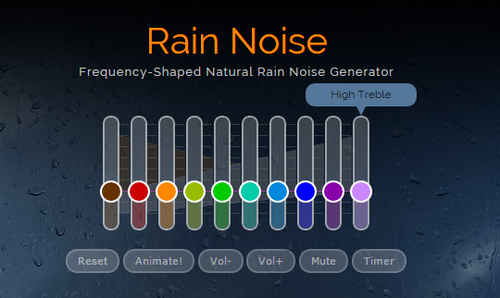
MyNoise is a customizable sounscape looper with so many options, even within each soundscape. So say, for instance, you really love rain sounds when you write or study or relax. Anything. I know I’m a big fan of rain sounds. They have a page for that.
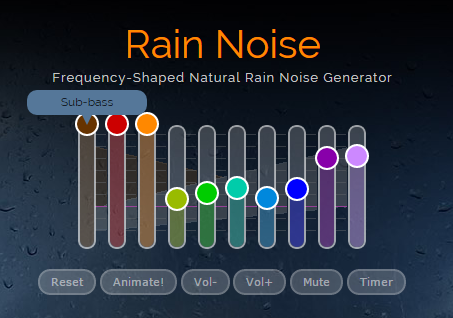
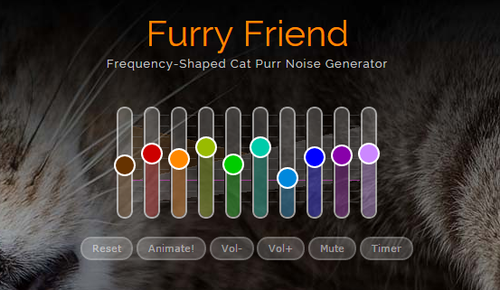
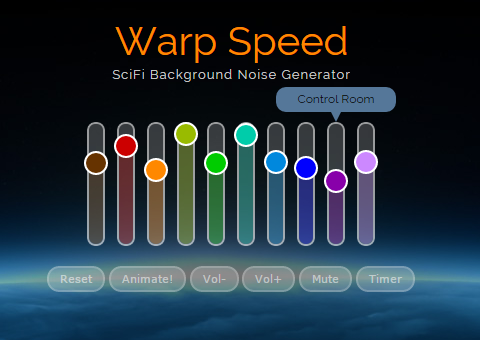
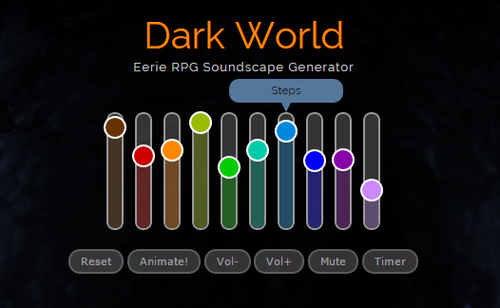
But say you like really high, pattery rain, and LOTS of low thunder. Here’s where MyNoise really stands out: you can customize that. See those sliders with all the cute colors? That is your equalizer. You can adjust the levels based on what you want to hear more and less of. Here’s how it looks when you want high, pattery rain and low, rumbly thunder:
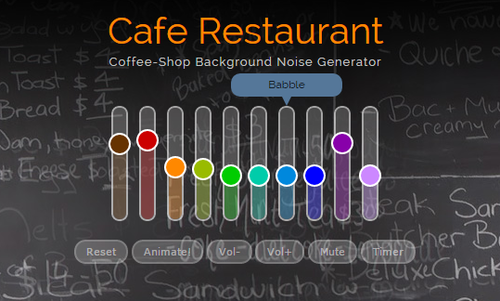
But say rain isn’t really your jam. Say you want something a little more ambient, a little more background noise-y. Something with people. Well, they have customizable coffee house chatter that even has the levels listed for things like “kitchen,” “babble,” and “table”:
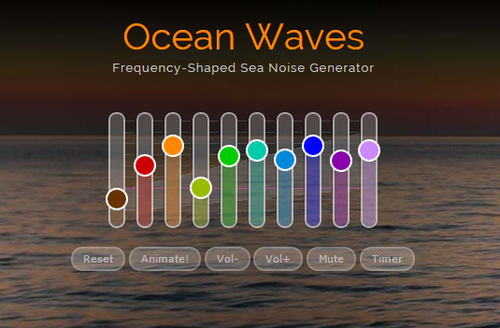
Or say you miss the ocean.
Or say you miss your cat.
Or say you miss your spaceship.
Or say you miss the dungeon where you and your team of scalawag adventurers used to explore and face off against, say, dragons. In the dungeon.
This site is seriously so helpful, and those are just a fraction of every kind of sounscape the site has to offer. The best part is that if you want to layer it with music (for instance, I’ll layer a playlist + rain + coffee shop if the scene I’m writing takes place in a coffee shop), you can adjust the master volume, meaning all of your layers stay at their respective volumes, just louder or quieter.
Enjoy!
OH MY GOD
Y’ALL I JUST STARTED USING THIS TODAY BUT THIS HAS BROKEN THROUGH MY WRITER’S BLOCK LIKE NOTHING ELSE.
We’ve all been warned about the dangers of using too much description. Readers don’t want to read three paragraphs about a sunset, we’re told. Description slows down a story; it’s boring and self-indulgent. You should keep your description as short and simple as possible. For those who take a more scientific approach to writing fiction, arbitrary rules abound: One sentence per paragraph. One paragraph per page. And, for god’s sake, “Never open a book with weather” (Elmore Leonard).
But what this conventional wedding wisdom fails to take into account is the difference between static and dynamic description. Static description is usually boring. It exists almost like a painted backdrop to a play. As the name suggests, it doesn’t move, doesn’t interact or get interacted with.
There were clouds in the sky. Her hair was red with hints of orange. The house had brown carpeting and yellow countertops.
In moderation, there’s nothing wrong with static description. Sometimes, facts are facts, and you need to communicate them to the reader in a straightforward manner.
But too much static description, and readers will start to skim forward. They don’t want to read about what the house looks like or the stormy weather or the hair color of each of your protagonist’s seventeen cousins.
Why? Because they can tell it’s not important. They can afford to skip all of your description because their understanding of the story will not be impacted.
That’s where dynamic description comes in. Dynamic description is a living entity. It’s interactive, it’s relevant. It takes on the voices of your narrators and characters. In short, it gives us important information about the story, and it can’t be skimmed over.
So how do you make your description more dynamic so that it engages your readers and adds color and excitement to your story? Here are a few tips.
(I have a TON more tips about setting and description. These are just a few. But I’m trying to keep this short, so if you have any questions or want more advice about this, please feel free to ask me.)
Sure, having a king/queen is simple, but have you ever tried:
Democracy
Multiple nobles and they all have the same amount of power (lot of conflict potential)
You can become ruler by defeating the current ruler in a fight
The merchants run everything
A noble and a parliament rule
The most intelligent people rule
…
There are thousands of possibilities, be creative!
Older post, but I highly encourage it! Try out the weirdest stuff! Try things you think would never work in the real world because this is your world and if you say (insert political system believed to not work) works then it does
Here’s a list of Society and Government types I’ve stolen directly from the worldbuilding section of some rulebooks:
Anarchy: the social conscience maintains order, but there are no laws
Athenian Democracy: Every citizen can vote on every new law
Representative Democracy: Elected representatives form a congress or government
Clan: Pretty much whoever is older is in charge, traditions are strongly adhered to, and society as a whole is split cross many tribes that are generally similar (and usually allied) but with their own quirks and traditions
Caste: A lot like a Clan structure, but each clan has a set role in society that usually renders them co-dependent. These Castes usually follow a social heirarchy
Dictatorship: One person controls everything, and they will later pass the right to rule to someone else, whether by inheritance, election, duelling, or some other method. Not all dictatorships are bad, especially if they are formed in times of crisis or rebellion, but even those started with the best intentions may quickly corrupt.
Plutocracy: Whoever has money is in charge.
Technocracy: A group of scientists and engineers have complete control and do everything they can to run the country at maximum efficiency. The more competent they are, the more likely this is to be viewed as a good thing.
Thaumocracy: Like a technocracy, but run by a science-like form of magic (like wizards and arcanists rather than shamans and witches)
Theocracy: The Church controls everything, and their religious law is civil law. Whether this religion is real, is fake but knows it, or believes its own lies is up to you.
Corporate State: Powerful mercantile organisations have taken control of entire regions. This is a lot like a Technocracy, but with a corporate structure and a focus on maximum profitability (and no-one else is going to set them a minimum wage)
Feudal: A lot like a dictatorship, but subsidiary lords are assigned their own local power and can enforce their own law without notifying the larger state.
***VARIATIONS***
Bureaucracy: Government runs very slowly and the public has effectively no control. There is a lot of red tape and taxation is high.
Colony: Government is dependent on a mother society
Cybercracy: A computer system is the state administrator. Hopefully the programmers did a good job…
Matriarchy: Positions of authority are female-exclusive.
Meritocracy: Positions of authority require rigorous testing to qualify for.
Military Government: The Military control everything, usually but not always totalitarian
Monarchy: The person in charge may call themselves king or queen, but fundamentally this is either a dictatorship or a feudal society.
Oligarchy: A small organisation is in control, and it elects its own members.
Patriarchy: like a matriarchy, but for guys. what a novel idea
Sanctuary: A society that protects the people other societies hunt (that may be considered criminals or terrorists by other nations)
Socialist: The government directly manages the economy, education is easy to get, the government intervenes to get everyone possible a job. This is likely to collapse quickly without good technology or magic to assist it.
Subjugated: The society as a whole is completely controlled by an outside force.
Utopia: A perfect society where everyone is satisfied and nothing sinister is happening behind the scenes we swear.
I didnt realize this was about fiction. I just thought it was a jab at England
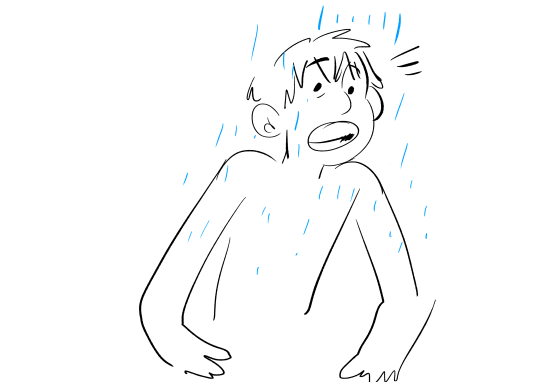
The real writer experience is standing in the shower and coming up with the most authentic dialogue with perfect phrasing and raw emotion in your head, then stepping out and drying your hair, putting on some clean pajamas and opening a word document to write down all your perfect ideas only to realize everything has evaporated.
I FEEL CALLED OUT
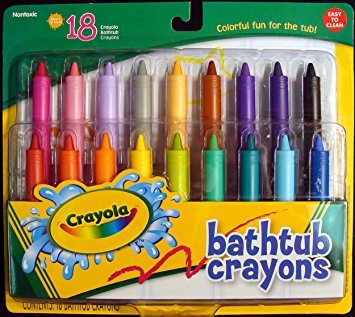
Never lose a perfect shower line again.*
*Remember to erase promptly if you share a bathroom with anyone.
I’ve used these to outline term papers. nothing like a bath to get your brain to finally kick into gear and figure out your damn thesis
WHAT
Also these handy little guys if you prefer a notepad:
Are you kidding, shower crayons are the BEST when you share a bathroom with other people. When I was in college, we had them and we would use them to carry on philosophical debates, finish song lyrics, get life/writing advice, etc. It was so much fun and I miss it.
A small list of random ass sites I’ve found useful when writing:
Fragrantica: perfume enthusiast site that has a long list of scents. v helpful when you’re writing your guilty pleasure abo fics
Just One Cookbook: recipe site that centers on Japanese cuisine. Lots of different recipes to browse, plenty of inspiration so you’re not just “ramen and sushi”
McCormick Science Institute: yes this is a real thing. the site shows off research on spices and gives the history on them. be historically accurate or just indulge in mindless fascination. boost your restaurant au with it
Cocktail Flow: a site with a variety of cocktails that’s pretty easy to navigate and offers photos of the drinks. You can sort by themes, strengths, type and base. My only real annoyance with this site is that the drinks are sometimes sorted into ~masculine~ and ~feminine~ but ehhhh. It’s great otherwise.
Tie-A-Tie: a site centered around ties, obviously. I stumbled upon it while researching tie fabrics but there’s a lot more to look at. It offers insight into dress code for events, tells you how to tie your ties, and has a section on the often forgotten about tie accessories
Even more:
Types of High Heels: A page describing twenty five different types of high heels. It gives a description and pictures. Shake it up from just “stilettos and kitten heels”
Random Job Generator: Exactly as it says. The site offer more generators like characters, plots, or town names.




 CaptainBubblebath