i was a little apprehensive to watch this because it’s four minutes long and i have a short attention span, but within the first 30 seconds i was hooked.
Lynne Cox is an accomplished American open water swimmer. Twice, she held the record for the fastest crossing of the English Channel. Cox was the first woman to swim the Cook Strait and the first to swim the Straits of Magellan and around the Cape of Good Hope. Cox swam the Bering Strait from American soil to Soviet soil in 1987, at the height of the Cold War.
Look at her.
I know open water swimming isn’t really glamorous, but Lynne Cox is arguably one of the greatest overlooked athletes of the 20th century.
And quite possibly a mutant.
She can withstand water temperatures that you or I would die from because of her training and her body’s unique reaction to cold (you know how the blood will leave your fingers and toes when it’s cold, to preserve heat? her whole body does that, pooling her blood in her core and insuring her body temperature stays toasty where it counts).
She funded the Bering Strait swim herself, clearing out her bank account when she couldn’t get corporate sponsors. After she succeeded (to almost everyone’s surprise: if you get in the Bering Sea without serious gear you generally just die) Gorbachev mentioned her during treaty talks with Nixon: “Last summer it took one brave American by the name of Lynne Cox just two hours to swim from one of our countries to the other. We saw on television how sincere and friendly the meeting was between our people and the Americans when she stepped onto the Soviet shore. She proved by her courage how close to each other our peoples live.“
She wasn’t just the first woman to swim the Strait of Magellan. She was the first person to make it across.
On top of setting multiple world records, she swam a mile+ to the coast of Antarctica, in just a bathing suit, and did not die.
She’s swum over 50,000 miles.
And look at her. This is a photo from when she was young, at the peak of her career and setting records all over the world. She is a great athlete. She is a human who can do things most humans would die trying. I’m sitting here at 1 AM getting all teary eyed because this is the first time I’ve looked up a photo of her and I am so surprised, so gratified, so overwhelmed to find out that this world record setter, this literal superhuman, has nearly the same body type as me.
Since they wouldn’t let her be a fantasy creature in a video game, she just did it in real life, I guess.
Anyone who thinks there is just one athletic body type isn’t paying attention during the Olympics opening ceremonies.
Her body type is optimized for her sport. The shape of her body and the presence of fat both provide insulation to keep her core warm while she swims.
A lot of open water swimmers aren’t this chunky, but that’s because most of them are actually triathletes, and their body type is a compromise between the ideals for the different sports.
There really is no one way to be fit and athletic. For some reason, we tend to get ourselves hung up on the body type of track and field athletes, especially that of marathon runners (who tend to carry almost no extra fat) as the ideal.
Ruby Bridges was the first black child to desegregate the all-white William Frantz Elementary School in Louisiana during the New Orleans school desegregation crisis in 1960.
This movie made me cry, I was so heart broken by how Ruby Bridges was treated! She was only 6, but was so strong. She is a very brave girl and she did not care what the white folks called her.
People are simply disgusting to minimize people by skin color!
Ruby you might not think you’re a hero… But to other people you are! You are A HERO and you are A PERSON WHO MADE AMERICA CHANGE!
this is white culture, this is their history, this is their legacy…being enraged at a damn baby just because she’s black.
she’s still alive by the way
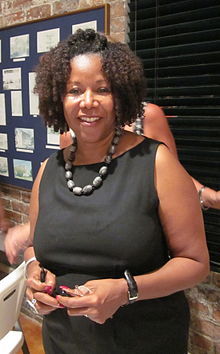
Ruby Bridges in 2010
“As Bridges describes it, “Driving up I could see the crowd, but living in New Orleans, I actually thought it was Mardi Gras. There was a large crowd of people outside of the school. They were throwing things and shouting, and that sort of goes on in New Orleans at Mardi Gras.“ Former United States Deputy Marshal Charles Burks later recalled, “She showed a lot of courage. She never cried. She didn’t whimper. She just marched along like a little soldier, and we’re all very very proud of her.“
U.S. Marshals escorted Bridges to and from school
As soon as Bridges entered the school, white parents pulled their own children out; all the teachers refused to teach while a black child was enrolled. Only one person agreed to teach Ruby and that was Barbara Henry, from Boston, Massachusetts, and for over a year Henry taught her alone, “as if she were teaching a whole class.”
Every morning, as Bridges walked to school, one woman would threaten to poison her; because of this, the U.S. Marshals dispatched by President Eisenhower, who were overseeing her safety, allowed Ruby to eat only the food that she brought from home.
Another woman at the school put a black baby doll in a wooden coffin and protested with it outside the school, a sight that Bridges Hall has said “scared me more than the nasty things people screamed at us.” At her mother’s suggestion, Bridges began to pray on the way to school, which she found provided protection from the comments yelled at her on the daily walks.”
THIS SHIT WAS ONLY 58 YEARS AGO. PEOPLE WHO PARTICIPATED IN THIS RACIST TERRORISM AND ACTS LIKE IT ARE STILL ALIVE, AND THEIR KIDS ARE IN THEIR 40′S AND 50′S.
DON’T LET RACISM APOLOGISTS GET AWAY WITH “WHY ARE YOU LIVING IN THE PAST,” BULLSHIT ARGUMENTS. WE ARE LITERALLY STILL DEALING WITH THE FAMILIES THAT FORMED HATE MOBS OVER BLACK CHILDREN ATTENDING SCHOOL WITH WHITE KIDS.
This was her then:
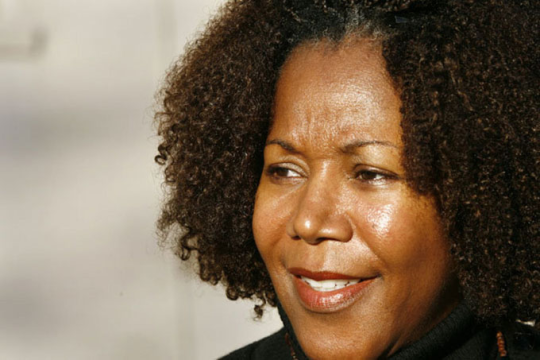
This is literally how she looks in 2017.
She’s literally not even old.
Some of those people in that crowd are VOTING this year. Their children raised by them are voting this year. And they want to Make America Great Again.
A picture of Freddie Oversteegen, a Dutch girl who was the unsuspecting killer of dozens of Nazis. Along with her friend Hannie and her sister Truus, the girls worked with a team from the Dutch Resistance to lure men into the woods for a promised kiss. Once they reached a remote location, the men got a bullet to the head instead.
Freddie passed away today on the 5th of September 2018, one day before her 93rd birthday.
I pay my respects to you, brave Miss and your friends.
This weekend I was schmoozing at an event when some guy asked me what kind of history I study. I said “I’m currently researching the role of gender in Jewish emigration out of the Third Reich,” and he replied “oh you just threw gender in there for fun, huh?” and shot me what he clearly thought to be a charming smile.
The reality is that most of our understandings of history revolve around what men were doing. But by paying attention to the other half of humanity our understanding of history can be radically altered.
For example, with Jewish emigration out of the Third Reich it is just kind of assumed that it was a decision made by a man, and the rest of his family just followed him out of danger. But that is completely inaccurate. Women, constrained to the private social sphere to varying extents, were the first to notice the rise in social anti-Semitism in the beginning of Hitler’s rule. They were the ones to notice their friends pulling away and their social networks coming apart. They were the first to sense the danger.
German Jewish men tended to work in industries which were historically heavily Jewish, thus keeping them from directly experiencing this “social death.” These women would warn their husbands and urge them to begin the emigration process, and often their husbands would overlook or undervalue their concerns (“you’re just being hysterical” etc). After the Nuremberg Laws were passed, and after even more so after Kristallnacht, it fell to women to free their husbands from concentration camps, to run businesses, and to wade through the emigration process.
The fact that the Nazis initially focused their efforts on Jewish men meant that it fell to Jewish women to take charge of the family and plan their escape. In one case, a woman had her husband freed from a camp (to do so, she had to present emigration papers which were not easy to procure), and casually informed him that she had arranged their transport to Shanghai. Her husband—so traumatized from the camp—made no argument. Just by looking at what women were doing, our understanding of this era of Jewish history is changed.
I have read an article arguing that the Renaissance only existed for men, and that women did not undergo this cultural change. The writings of female loyalists in the American Revolutionary period add much needed nuance to our understanding of this period. The character of Jewish liberalism in the first half of the twentieth century is a direct result of the education and socialization of Jewish women. I can give you more examples, but I think you get the point.
So, you wanna understand history? Then you gotta remember the ladies (and not just the privileged ones).
Holy fuck. I was raised Jewish— with female Rabbis, even!— and I did not hear about any of this. Gender studies are important.
“so you just threw gender in there for fun” ffs i hope you poured his drink down his pants
I actually studied this in one of my classes last semester. It was beyond fascinating.
There was one woman who begged her husband for months to leave Germany. When he refused to listen to her, she refused to get into bed with him at night, instead kneeling down in front of him and begging him to listen to her, or if he wouldn’t listen to her, to at least tell her who he would listen to. He gave her the name of a close, trusted male friend. She went and found that friend, convinced him of the need to get the hell out of Europe, and then brought him home. Thankfully, her husband finally saw sense and moved their family to Palestine.
Another woman had a bit more control over her own situation (she was a lawyer). She had read Mein Kampf when it was first published and saw the writing on the wall. She asked her husband to leave Europe, but he didn’t want to leave his (very good) job and told her that he had faith in his countrymen not to allow an evil man to have his way. She sent their children to a boarding school in England, but stayed in Germany by her husband’s side. Once it was clear that if they stayed in Germany they were going to die, he fled to France but was quickly captured and killed. His wife, however, joined the French Resistance and was active for over a year before being captured and sent to Auschwitz.
(This is probably my favorite of these stories) The third story is about a young woman who saved her fiance and his father after Kristallnacht. She was at home when the soldiers came, but her fiance was working late in his shop. Worried for him, she snuck out (in the middle of all the chaos) to make sure he was alright. She found him cowering (quite understandably) in the back of his shop and then dragged him out, hoping to escape the violence. Unfortunately, they were stopped and he, along with hundreds of other men, was taken to a concentration camp. She was eventually told that she would have to go to the camp in person to free him, and so she did. Unfortunately, the only way she could get there was on a bus that was filled with SS men; she spent the entire trip smiling and flirting with them so that they would never suspect that she wasn’t supposed to be there. When she got to the camp, she convinced whoever was in charge to release her fiance. She then took him to another camp and managed to get her father-in-law to be released. Her father-in-law was a rabbi, so she grabbed a couple or witnesses and made him perform their marriage ceremony right then and there so that it would be easier for her to get her now-husband out of the country, which she did withing a few months. This woman was so bad ass that not only was her story passed around resistance circles, even the SS men told it to each other and honoured her courage.
The moral of these stories is that men tend to trust their governments to take care of them because they always have; women know that our governments will screw us over because they always have.
Another interesting tidbit is that there is sufficient evidence to suggest that Kristallnacht is a term that historians came up with after the fact, and was not what the event was actually called at the time. It’s likely that the event was actually called was (I’m sorry that I can’t remember the German word for it but it translates to) night of the feathers, because that, instead of broken glass, is the image that stuck in people’s minds because the soldiers also went into people’s homes and destroyed their bedding, throwing the feathers from pillows and blankets into the air. What does it say that in our history we have taken away the focus of the event from the more domestic, traditionally feminine, realms, and placed it in the business, traditionally masculine, realms?
Badass women and interesting commentary. Though I would argue that “Night of Broken Glass" includes both the personal and the private spheres. It was called Kristallnacht by the Nazis, which led to Jewish survivors referring to it as the November Pogrom until the term “Kristallnacht" was reclaimed, as such.
None of this runs directly counter to your fascinating commentary, though.
READ THIS.
“
The moral of these stories is that men tend to trust their governments to take care of them because they always have; women know that our governments will screw us over because they always have.

















 CaptainBubblebath