this seven year old girl got half an arm (just like lusie in the gifs) 3d printed and it only cost $50
can we just compare that with the average price of buying a prosthetic
3d printing is gonna help so many people holy crap
No no no, guys, this gif set leaves out the literal best stuff from the video.
So a few years back, this guy who accidentally cut off his fingers, teamed up with a special effects artist/puppeteer and created a 3D printable prosthetic hand, that used the movement of the wearer to be able to grab things. The guys who did this said they were just going to post the schematics online, which in turn lead to creating a network of people with 3D printers, who were willing to print prosthetics for people. The network of volunteers, turned into an organization that gives prosthetic arms/hands to kids who need them. They have science types improving the designs and creating new ones, they got a grant from Google, classrooms and scout troops are getting involved and making prosthetic hands for people.
Everything about this is amazing.
This is a HUGE win in terms of making the world a more accessible place!
The substance the teacher uses in the video is liquid methane. But methane has a really low boiling point. Like, about −160 °C low. So once it touches the comparatively hot floor, the Leidenfrost effect comes into play, and it slides across the floor. The issue is though, methane is colorless, so you can’t normally see it. Thankfully (in this demonstration), methane is also very flammable, so he sets it on fire before dumping it onto the floor so you can see it as it moves.
Definitely a cooler demonstration of the Leidenfrost effect than dropping a little water in a hot pan.
Or hotter, if you like puns.
THANKS FOR EXPLANATION SCIENTIFIC SIDE OF TUMBLR
My mama said I can’t be in yo class no more
how the heck did he get past health and safety to do this
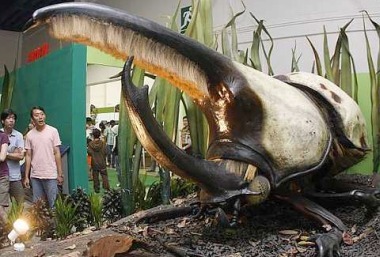
The Titanoboa, is a 48ft long snake dating from around 60-58million years ago. It had a rib cage 2ft wide, allowing it to eat whole crocodiles, and surrounding the ribcage were muscles so powerful that it could crush a rhino. Titanoboa was so big it couldn’t even spend long amounts of time on land, because the force of gravity acting on it would cause it to suffocate under its own weight.
I’m so glad they aren’t around
omg me too. I’m scared enough of 26 ft long anacondas. I’m so happy Megalodons, those giant sharks, aren’t alive either
Praise natural selection
I remember watching Walking with Beasts or something similar, or some British tv show about evolution
The subject was something like a 12 foot long water scorpion
I was so startled by its sudden appearance and narration that I yelped: “12 fucking feet?!?! I’m fucking glad it’s extinct!”
Dude, prehistory was home to some fucking TERRIFYING creatures. For some reason, everything back then was enormous and scary. Extinction doesn’t always have to be a bad thing!
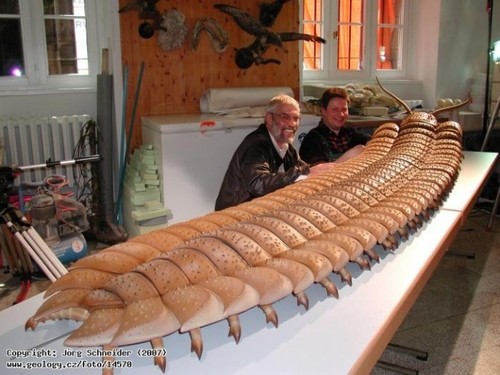
And Poppy, what you saw was an arthropod known as Pterygotus (it was actually featured in Walking With Monsters). Not only was it as big (or maybe even bigger) than your average human, it had a stinger the size of a lightbulb. REALLY glad that bugger isn’t around anymore.
Also, Megalodon deserves to be mention again, because just hearing its name makes me want to never be submerged in water ever again.
GOD, I HATE THIS POST. HOW DO WE EVEN KNOW THAT SHIT ISN’T STILL AROUND? LURKING? EVOLVING? WE DON’T. WE DON’T KNOW SHIT ABOUT SHIT DOWN THERE. THE OCEAN IS A PRIMEVAL HELLSCAPE NIGHTMARE AND WE ALL JUST DIP OUR STUPID FRAGILE UNPROTECTED FETUS BODIES AROUND THE EDGES OF IT LIKE THAT’S NORMAL. FUCK THE OCEAN.
this is so relevant to my interests
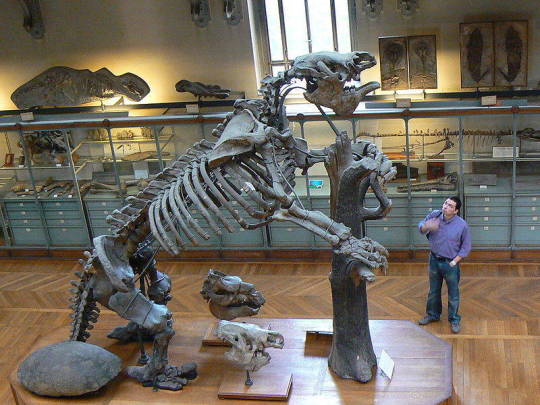
It wasn’t just the predators. North Carolina was once home to giant ground sloths…
THAT IS A GODDAMNED LEAF-EATING SLOTH.
We’ve got a skeleton of one of these fuckers at the museum downtown, and man, just being NEAR it is unsettling.
DON’T FORGET PREHISTORIC WHALES, SOME OF THOSE FUCKERS WERE TERRIFYING
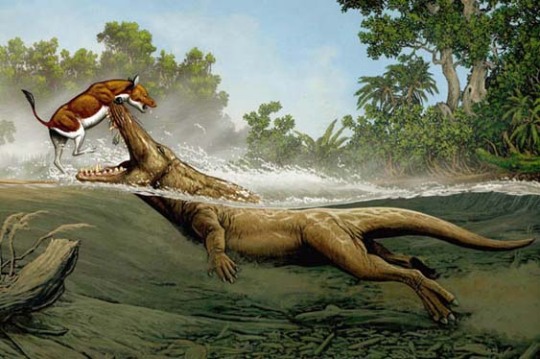
AMBULOCETUS WAS AMPHIBIOUS AND PRETTY BADASS
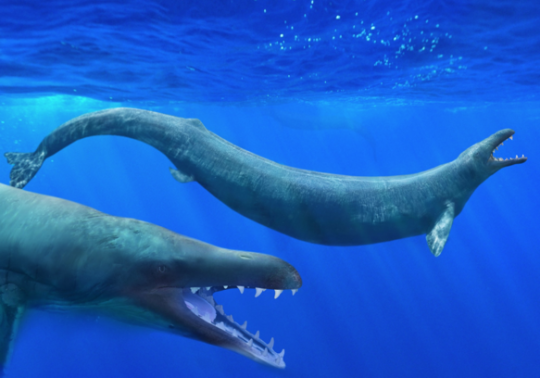
BASILOSAURUS WAS THIS GIANT REPTILIAN CETACEAN THAT PROBABLY SWAM LIKE A DUMB EEL BECAUSE OF ITS TINY FLUKES BUT THIS FUCKER WAS 60 FEET LONG AND AT THE TOP OF THE MARINE FOOD CHAIN
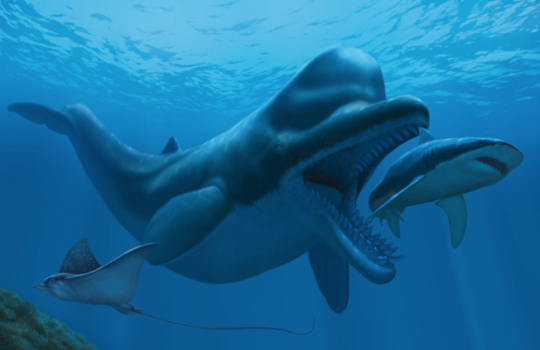
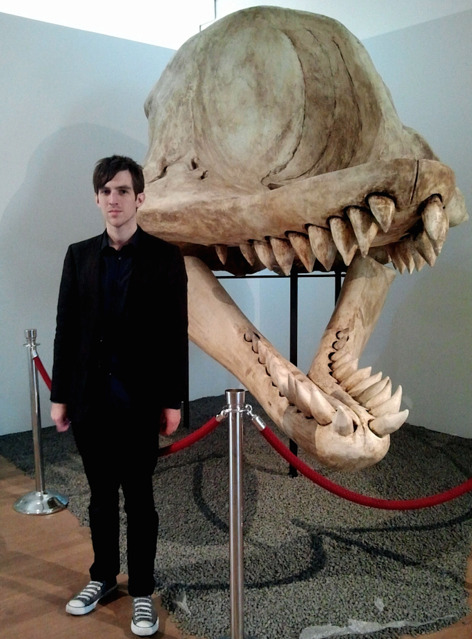
AND THEN THERE’S MY FAVORITE, ZYGOPHYSETER, WHICH WAS THIS HUGE EARLY SPERM WHALE THAT ATE SHARKS AND OTHER WHALES
IT WAS NOTHING BUT TEETH
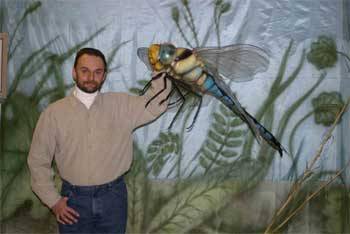
The reason why the animals in the prehistoric times were so big was because there was much more oxygen in the atmosphere if I recall correctly. Because there was so much oxygen and so few carbon gasses, life on earth was able to grow to terrifying lengths and heights, don’t forget how giant the bugs were.
I have never seen so much prime nope in a single post
Also important to note that megalodon is theorized to still be alive,possibly living in the darkest depths of the ocean. They haven’t found signs of its extinction
scientists: “we haven’t seen a megalodon in quite some time now, let’s just hope it’s exstinct”
This whole post is my JAM not gonna lie I am fascinated by massive prehistoric animals
A graduate student has created the first man-made biological leaf. It absorbs water and carbon dioxide to produce oxygen just like a plant. He did this by suspending chloroplasts in a mixture made out of silk protein. He believed it can be used for many things but the most striking one is the thought that it could be used for long distance space travel. Plants do not grow in space, but this synthetic material can be used to produce oxygen in a hostile environment. (Video)
If you don’t think this is cool, you are very wrong.
A 25-year-old student has just come up with a way to fight drug-resistant superbugs without antibiotics.
The new approach has so far only been tested in the lab and on mice, but it could offer a potential solution to antibiotic resistance, which is now getting so bad that the United Nations recently declared it a “fundamental threat” to global health.
Antibiotic-resistant bacteria already kill around 700,000 people each year, but a recent study suggests that number could rise to around 10 million by 2050.
In addition to common hospital superbug, methicillin-resistant Staphylococcus aureus (MRSA), scientists are now also concerned that gonorrhoea is about tobecome resistant to all remaining drugs.
But Shu Lam, a 25-year-old PhD student at the University of Melbourne in Australia, has developed a star-shaped polymer that can kill six different superbug strains without antibiotics, simply by ripping apart their cell walls.
“We’ve discovered that [the polymers] actually target the bacteria and kill it in multiple ways,” Lam told Nicola Smith from The Telegraph. “One method is by physically disrupting or breaking apart the cell wall of the bacteria. This creates a lot of stress on the bacteria and causes it to start killing itself.”
Before we get too carried away, it’s still very early days. So far, Lam has only tested her star-shaped polymers on six strains of drug-resistant bacteria in the lab, and on one superbug in live mice.
But in all experiments, they’ve been able to kill their targeted bacteria – and generation after generation don’t seem to develop resistance to the polymers.